
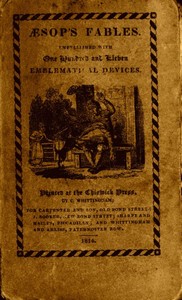
Æsop's Fables, Embellished with One Hundred and Eleven Emblematical Devices.
Okay, let's clear something up first. This isn't a novel with a single plot. It's a treasure chest. Inside are hundreds of tiny, perfect stories, most just a paragraph long. A fox can't reach some grapes and decides they're sour anyway. A tortoise challenges a speedy hare to a race. A boy falsely cries 'Wolf!' too many times. Each fable is a self-contained world where animals act out very human dramas, and every story ends with a clear, punchy moral. The 'plot' is the universal human experience, broken down into bite-sized, unforgettable lessons.
Why You Should Read It
First, the 'Emblematical Devices' are the star of this show. They're not just pretty pictures. Each one is a detailed engraving that acts like a visual puzzle, expanding on the fable's lesson. You read the story, get the moral, and then the emblem asks you to look deeper. It makes you an active participant. Second, the themes are shockingly current. We're still dealing with fake news (the boy who cried wolf), the dangers of arrogance (the hare), and the importance of community (the ants). These stories cut through centuries of cultural noise to point at the core of who we are. They're gentle but firm, simple but never simplistic.
Final Verdict
This specific edition is a gem for anyone who loves art and story together. It's perfect for parents who want to share smart, classic tales with their kids (the emblems are great for discussion). It's for readers who want profound wisdom but are short on time—you can devour three fables in five minutes and think about them all day. And it's absolutely for the curious person who wonders how a story about a crow and a pitcher of water can remain relevant from ancient Greece to the modern world. It's not just a book; it's a conversation with history that still has a lot to say.
This title is part of the public domain archive. It is available for public use and education.
Donald Martin
1 year agoIt’s refreshing to see such a high standard of digital publishing.
Barbara Brown
7 months agoFinally found a version that is easy on the eyes.
John Williams
3 months agoFrom a researcher's perspective, the way the author breaks down the core concepts is remarkably clear. A perfect balance of theory and practical advice.
Karen Jones
1 month agoBefore I started my latest project, I read this and the way it challenges the status quo is both daring and well-supported. I feel much more confident in my knowledge after finishing this.




Christopher Anderson
4 weeks agoI appreciate the objective tone and the evidence-based approach.