
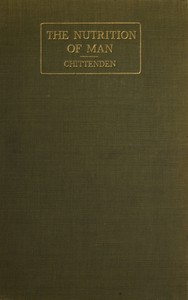
The nutrition of man by R. H. Chittenden
So, here’s the story. In the early 1900s, the world of nutrition was ruled by one big idea: you need a huge amount of protein to be strong and healthy. We’re talking portions that would make a modern bodybuilder blush. Enter Russell Chittenden, a biochemistry professor at Yale who thought this was all nonsense. He believed the body needed far less.
To prove it, he didn’t just write a paper. He ran a years-long experiment, turning himself and a group of Yale students (and later, some soldiers and athletes) into human lab rats. They followed a strict, low-protein diet. Everyone expected them to waste away. But the opposite happened. They reported feeling better, with more energy and fewer aches. The athletes performed just as well, if not better. Chittenden’s book lays out all this evidence, arguing passionately that we’re overeating and harming our bodies with excess, especially protein. It’s his full case to the world, trying to change a deeply held belief.
Why You Should Read It
This book is fascinating because it lets you watch a scientific revolution in slow motion. You’re right there with Chittenden as he questions everything. It’s personal—you can feel his frustration with the mainstream and his excitement over his data. It’s not just charts and numbers (though there are some); it’s about people’s lived experience with food.
Reading it today is a weirdly humbling experience. It shows how scientific "truths" we take for granted were once fiercely debated. It makes you think about what we believe about nutrition right now that might seem silly in 100 years. The core idea—that less can be more—feels incredibly modern, even if the language is from another century.
Final Verdict
This is a perfect pick for curious foodies, history of science nerds, or anyone who enjoys a good underdog story. If you like podcasts or articles that debunk health myths, you’ll appreciate seeing where a lot of that started. It’s not a light beach read—the writing is of its time—but it’s surprisingly gripping if you’re interested in where our ideas about food come from. You’ll walk away with a new appreciation for the long, messy fight to understand our own bodies.
Deborah Robinson
2 years agoSurprisingly enough, the author's voice is distinct and makes complex topics easy to digest. Highly recommended.
Elijah Garcia
6 months agoBased on the summary, I decided to read it and it challenges the reader's perspective in an intellectual way. One of the best books I've read this year.
Patricia Harris
2 years agoVery interesting perspective.
Oliver Jones
2 months agoBased on the summary, I decided to read it and the arguments are well-supported by credible references. A true masterpiece.



Jennifer Johnson
1 year agoUsed this for my thesis, incredibly useful.