
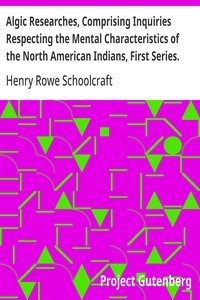
Algic Researches, Comprising Inquiries Respecting the Mental Characteristics of…
Let's set the scene. It's the 1830s. America is pushing west. Henry Schoolcraft, a government Indian agent married to an Ojibwe woman, finds himself in a unique position. Instead of just reporting on resources or conflicts, he starts collecting stories. 'Algic Researches' is the result—a massive attempt to document the oral traditions, languages, and beliefs of the Native peoples around the Great Lakes, whom he called the 'Algic' family.
The Story
There isn't a single plot. Think of it as a field notebook that became a book. Schoolcraft presents creation myths, like the epic of Manabozho (a trickster-hero similar to figures in other cultures), animal fables, and ghost stories. He describes social customs and tries to analyze the structure of Ojibwe language. The 'story' is his journey of gathering these fragments. We follow him as he translates tales of how the world was made from a turtle's back, why the woodpecker has red marks, and what the spirits of the forest said. It’s a direct line to a way of understanding the world that was largely invisible to the American public at the time.
Why You Should Read It
You read this for the raw, unfiltered access. These aren't stories polished for a modern audience. You feel Schoolcraft's struggle to fit circular oral traditions into linear paragraphs. That struggle is part of the point. It makes you active as a reader, reading between his lines to hear the original voices. The themes are timeless: creation, morality, the relationship between humans and nature, and the power of a good story to explain the unknown. It’s humbling. You realize the land we live on has layers of stories we've mostly forgotten, stories full of humor, wisdom, and profound connection.
Final Verdict
This is not a beach read. It's for the curious explorer. Perfect for anyone interested in the real roots of American folklore, for readers of mythology who want to go beyond Greek and Norse tales, and for people who appreciate primary sources with all their wrinkles intact. If you liked the feel of Bury My Heart at Wounded Knee but from an ethnographic angle, or if you're fascinated by how history gets written, give this a look. Just remember: you're not getting a neat package. You're getting a vital, complicated conversation started nearly 200 years ago.
This historical work is free of copyright protections. It is available for public use and education.
Ashley Jones
1 year agoI was particularly interested in the case studies mentioned here, the footnotes provide extra depth for those who want to dig deeper. Top-tier content that deserves more recognition.
Mary Johnson
1 year agoAs a long-time follower of this subject matter, it addresses the common misconceptions in a very professional manner. Simple, effective, and authoritative – what else could you ask for?
James Jones
1 month agoThis was exactly the kind of deep dive I was searching for, the step-by-step breakdown of the methodology is extremely helpful for students. A trustworthy resource that I'll keep in my digital library.
Patricia Jackson
4 months agoIt’s rare to find such a well-structured narrative nowadays, the way it challenges the status quo is both daring and well-supported. I am looking forward to the author's next publication.

Barbara Taylor
5 months agoMy first impression was quite positive because the step-by-step breakdown of the methodology is extremely helpful for students. Top-tier content that deserves more recognition.