
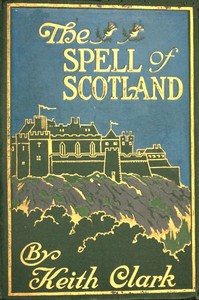
The spell of Scotland by Keith Clark
Keith Clark's The Spell of Scotland isn't a novel with a plot in the traditional sense. Its story is the author's own journey of discovery. Published in 1916, the book follows Clark as he travels across Scotland, determined to pin down the source of its famous, haunting appeal. He calls this appeal 'the spell,' and the entire book is his attempt to break its code.
The Story
The narrative moves with Clark as he explores. One chapter he's in the bustling, history-soaked streets of Edinburgh, pondering the stark contrast between the elegant New Town and the dark closes of the Old Town. The next, he's in the silence of the Trossachs or facing the sheer drama of Glencoe, listening to the wind and the stories it seems to carry. He visits battlefields like Culloden, tries to understand the fierce loyalty of the clans, and reflects on the figures—from Mary, Queen of Scots to Robert the Bruce—who shaped the nation's turbulent story. There's no single villain or hero, just Scotland itself as the main character, with Clark as our curious and deeply feeling guide.
Why You Should Read It
What makes this book special is Clark's voice. He writes with a warmth and immediacy that cuts through the century since it was written. You feel his wonder, his occasional frustration, and his growing affection. He doesn't just describe a loch; he makes you feel its cool, deep stillness. He connects the physical beauty directly to the emotional weight of the history. It's less about facts and dates and more about the feeling a place can generate. Reading it made my own desire to visit Scotland sharper and more meaningful, because he taught me to look beyond the postcard view for the story and the spirit underneath.
Final Verdict
This is the perfect book for the dreamer-traveler. If you've ever scrolled through photos of the Scottish Highlands and felt a pang, or if you're planning a trip and want to go deeper than the guidebooks, Clark is your man. It's also a lovely read for anyone who enjoys personality-driven travel writing with a historical bent. Just be ready for its early 20th-century perspective—it's a charming window into how people traveled and thought about place a hundred years ago. Don't expect a modern, critical history; expect a passionate, poetic, and utterly captivating love letter to a land that clearly held its author in thrall.
This content is free to share and distribute. Distribute this work to help spread literacy.
Nancy Martinez
1 year agoAs a professional in this niche, the clarity of the writing makes even the most dense sections readable. An excellent example of how quality digital books should be formatted.
John Wilson
10 months agoBefore I started my latest project, I read this and the way it handles controversial points with balance is quite professional. Top-tier content that deserves more recognition.
Christopher Perez
11 months agoInitially, I was looking for a specific answer, but the objective evaluation of the pros and cons is very refreshing. I'm genuinely impressed by the quality of this digital edition.
William Jackson
10 months agoThis digital copy caught my eye due to its reputation, the quality of the diagrams and illustrations (if applicable) is top-notch. If you want to master this topic, start right here.




Paul Thomas
4 months agoIt’s rare to find such a well-structured narrative nowadays, the structural organization allows for quick referencing of key points. Well worth the time invested in reading it.