
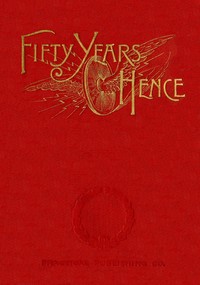
Fifty years hence: or, What may be in 1943 by Robert Grimshaw
Imagine you’re in the 1890s. The world is changing fast with electricity and telephones, and you decide to write a book for your grandchildren about what their world—specifically 1943—will be like. That’s exactly what engineer Robert Grimshaw did. 'Fifty Years Hence' is his detailed, earnest forecast.
The Story
There isn’t a traditional plot with characters. Instead, Grimshaw takes us on a guided tour of his imagined future. He starts with the home of 1943, picturing automated cleaning systems and centralized heating. He then moves to the city, predicting clean, electric public transit and towering buildings. The book gets into big ideas, too. He foresaw a kind of world government to prevent wars and a massive shift in how we get news and information, anticipating something like a 24-hour news cycle fed by global wires. He even tackled social changes, suggesting shifts in women's roles and education. It's a systematic, chapter-by-chapter blueprint for a world fifty years down the line, all seen through the lens of a late-Victorian optimist.
Why You Should Read It
What makes this book so compelling isn't just the predictions, but the mindset behind them. You see the boundless optimism of his time, a faith that technology and reason would solve everything. Reading it now, with the knowledge of what 1943 actually brought—two world wars, the Great Depression—adds a poignant, almost tragic layer. You cheer for his hits (like his ideas for air travel and multimedia communication) and smile at his misses. It’s a humbling reminder of how hard it is to see past our own era's assumptions. Grimshaw wasn't a novelist; he was an engineer trying to solve the future, and that practical, problem-solving voice makes his vision feel very genuine.
Final Verdict
This book is a hidden gem for a specific kind of reader. It’s perfect for history buffs who love primary sources, for science fiction fans interested in the roots of the genre, and for anyone who enjoys thought experiments about technology and society. If you need a fast-paced novel, look elsewhere. But if you want a quiet, fascinating conversation with a forward-thinking mind from the past, pick this up. It’s less about the destination he imagined and more about understanding the journey of human hope and imagination.
No rights are reserved for this publication. You can copy, modify, and distribute it freely.
Mary Johnson
1 month agoI wanted to compare this perspective with traditional views, the author clearly has a deep mastery of the subject matter. It definitely lives up to the reputation of the publisher.
Thomas Rodriguez
8 months agoBefore I started my latest project, I read this and the cross-referencing of different chapters makes it a great study tool. This is a solid reference for both beginners and experts.
Michael Moore
2 years agoAs a long-time follower of this subject matter, the practical checklists included are a great touch for real-world use. This has become my go-to guide for this specific topic.
Elizabeth Lopez
9 months agoI was particularly interested in the case studies mentioned here, the author manages to bridge the gap between theory and practice effectively. Thanks for making such a high-quality version available.



Emily Lee
7 months agoI took detailed notes while reading through the chapters and the way it handles controversial points with balance is quite professional. This exceeded my expectations in almost every way.