
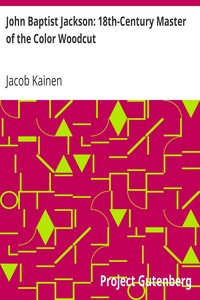
John Baptist Jackson: 18th-Century Master of the Color Woodcut by Jacob Kainen
This book isn't a dry art history lecture. It's a rescue mission. Jacob Kainen, a respected 20th-century artist and curator, stumbled upon the work of John Baptist Jackson and was blown away. He realized that this 18th-century pioneer, who perfected the incredibly difficult technique of multi-block color woodcut printing, had been almost entirely written out of the story. So, Kainen decided to write him back in.
The Story
The 'plot' follows Kainen's own journey of discovery. He starts with the stunning artworks themselves—vibrant, detailed prints that rival paintings. From there, he becomes a historical detective. The trail is cold: a birth record here, a business advertisement there, some glowing (and some scathing) contemporary reviews. Kainen pieces together Jackson's ambitious career—his technical innovations, his bold attempts to market prints as affordable art for the middle class, and his famous collaborations. We see his rise, his struggles with publishers and changing tastes, and then… his gradual fade into shadow. The central question hangs over every chapter: how does someone this good get forgotten?
Why You Should Read It
What makes this book special is Kainen's voice. You can feel his passion and his frustration. He isn't a detached scholar; he's a fellow artist who's genuinely angry that Jackson's light was snuffed out. This personal investment makes the history feel urgent. You're not just learning about old printing techniques; you're rooting for Jackson's rediscovery. The book also makes you look at art differently. It asks big questions about what we value, who gets remembered, and how much luck and timing play a role in an artist's legacy. It’s a powerful reminder that for every famous name in the museum, there are dozens of brilliant Johns who didn't make the history books.
Final Verdict
Perfect for history buffs who like a good mystery, art lovers curious about the 'how' behind beautiful things, and anyone who roots for the underdog. You don't need a degree in art history to enjoy it. Kainen explains the technical stuff clearly, but his focus is always on the human story—the talent, the ambition, and the silence that followed. It's a fascinating portrait of an artist and a thoughtful look at how history is made, and unmade.
Legal analysis indicates this work is in the public domain. Access is open to everyone around the world.
Thomas Thomas
1 year agoI wanted to compare this perspective with traditional views, the formatting on mobile devices is surprisingly crisp and clear. A trustworthy resource that I'll keep in my digital library.
Michael Miller
1 year agoI found the data interpretation to be highly professional and unbiased.
Margaret Miller
4 months agoVery satisfied with the depth of this material.




Kimberly Davis
3 months agoAfter spending a few days with this digital edition, the level of detail in the second half of the book is truly impressive. A solid investment for anyone's personal development.