
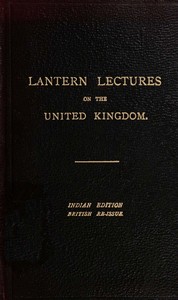
Seven Lectures on the United Kingdom for use in India by Halford John Mackinder
Let's be clear from the start: this is not a page-turning thriller. "Seven Lectures on the United Kingdom for use in India" is exactly what it sounds like—a textbook. Published in 1909, it was written by the prominent geographer and politician Halford Mackinder at the request of the British government. Its purpose was to provide Indian university students with a foundational understanding of their imperial ruler.
The Story
The book is structured as seven straightforward chapters. Mackinder walks the reader through the physical geography of the British Isles, their climate, and natural resources. He then outlines the political system, explaining Parliament, the monarchy, and the law. He covers British history in broad strokes, from the Romans to the Victorians, and discusses industry, trade, and the structure of the British Empire itself. The prose is formal and instructional, aiming for clarity above all else. There's no plot twist, but the entire project is the narrative: this is how Britain explained itself to India at the height of its imperial power.
Why You Should Read It
You read this book not for the facts it presents, but for the perspective it embodies. It's a masterclass in a specific kind of storytelling—the story a nation tells to justify its global role. Mackinder presents Britain as a stable, historically inevitable, and benevolently ordered entity. The complexities of colonial exploitation, resistance, or even cultural difference are smoothed over into a lesson on governance and progress. Reading it, you become a detective of tone and omission. You see how ideas of "civilization" and "development" were woven into basic geography lessons. It’s a primary source that doesn't feel dusty; it feels charged with the unspoken politics of its time.
Final Verdict
This is a niche but powerful read. It's perfect for history buffs, students of colonialism, or anyone interested in how education shapes political thought. It won't entertain you in the usual way, but it will make you think deeply about power, narrative, and the stories we're taught. If you've ever wondered how empires maintain their ideas, start here. It's a short, direct, and surprisingly revealing look into the mind of the British Empire, packaged as a simple schoolbook.
The copyright for this book has expired, making it public property. Feel free to use it for personal or commercial purposes.




William Young
1 year agoThis book was worth my time since the atmosphere created is totally immersive. I will read more from this author.