1

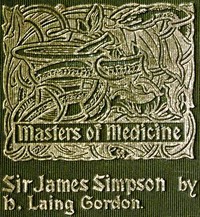
Sir James Young Simpson and Chloroform (1811-1870) Masters of Medicine — Edition Insights
(0 User reviews)
798
Project Gutenberg
2010
Not confirmed
Simpson, James Young, 1811-1870; Chloroform; Anesthetics
Readers of public-domain and historical texts
Project Gutenberg digital edition
en
Edition facts
Words
59,789
Reading time
260 min
Text sections
8
Sir James Young Simpson and Chloroform (1811-1870) Masters of Medicine — Edition Insights can be approached with a clearer sense of reading commitment from its source measurements: 59,789 words, 4 hr 20 min estimated reading time, and 8 detected text sections.
The text analysis averages about 25.6 words per sentence, while the detected sections provide another way to judge how the source is divided.
Project Gutenberg metadata also associates the work with “Simpson, James Young, 1811-1870,” connecting these edition facts with the source record’s subject description.
Source:
Project Gutenberg record #34128
Gordon's biography of Simpson focuses on his discovery of chloroform anesthesia and the ensuing religious controversy, using Simpson's own writings and contemporary accounts to show how he defended pain relief in childbirth by reinterpreting the Hebrew text of Genesis.
Editorial Edition Score
4.7/5
★★★★★
★★★★★
Calculated from edition completeness, EPUB availability, text structure and catalogue metadata. Not a user rating.
How this score is calculated
- Description quality20 pts
- Title & short description10 pts
- Source metadata20 pts
- Text length15 pts
- Chapters / structure15 pts
- EPUB file integrity20 pts
Total of 100 points, scaled to a 2.5-5.0 range. Editions with an empty description or a missing EPUB file are not scored.
Edition quality
Read the Text
STUDENT DAYS. 1825-1830.
Visit to Edinburgh--Sent to the University--Takes the Arts classes--Gains a bursary--Influence of MacArthur and Reid--Robert Knox the anatomist--The Burke and Hare murders--Superiority of the extra-mural teachers of the day--Edinburgh an intellectual centre--University life--His mode of living as a student--Apprenticed to a chemist--Studies surgery under Liston--Regularly falls asleep in the obstetric class--Influence of his teachers--Verse writing--Description of the medical student of the day--Vacation work--Death of his father--Obtains qualification to practice at the age of eighteen.
Although Edinburgh was only eighteen miles from Bathgate, Simpson visited it only once as a schoolboy; probably he walked all the way, for railroads were as yet unknown and it was not a long walk for a country-bred vigorous youth. He exercised his already formed habit of noting objects of interest during this great event in his boyhood, and in his journal there are copies of old inscriptions from tombs in the famous Greyfriars' Churchyard to which he made his pilgrimage.
The boy's nearest and dearest ambition was to become a student at "the College," as Edinburgh University was familiarly termed. It received encouragement in the periodical return to the village of elder boys who had gone up before him. He was specially struck, and afterwards stimulated, by the appearance of one John Reid, his senior by two years, and his former companion in many a country ramble, who came back for the vacations smartened up both physically and mentally by the new life.
Although the collegiate life characteristic of Oxford was unknown in Scots Universities, there was social intercourse amongst the boys very different from that of the village. The ancient Edinburgh University attracted students from all parts of the world, mostly for the medical curriculum, but many preceded the professional course with a year or two's attendance on the Arts classes; and it was usual for young Englishmen of good family to spend a session at Edinburgh before going to Oxford or Cambridge. Probably before he entered the medical classes, Simpson rubbed shoulders with lads of all ranks from home and abroad. Pillans was at this time the Professor of Humanity, Wallace held the chair of Mathematics, John Wilson--better known as Christopher North--that of Moral Philosophy, and Dunbar was Professor of Greek. Wallace had begun life as a bookbinder's apprentice, and Dunbar had risen from being a gardener; the example of these men under whose influence he was brought encouraged the baker's son to go and do likewise.
The family had sent him off to the College with the mission to be famous, and he was beginning only in an orthodox fashion when he entered himself for the curriculum in Arts. It had been easy for him, with his magnificent brain power, to stand _dux_ of the village school over the ordinary village youth; but here, in Edinburgh, he was brought into competition with the picked boys from other country schools, and intellectually eager youths from town schools where the course of instruction was such as more easily to lead to early University success than that of the Bathgate parish school. At first he found difficulty and desponded. The keen observer with senses all alert was dashed to find so much of the College life to which he had so eagerly looked forward only a magnified repetition of the dull school routine. But he was too intent on ultimate success to be repulsed by his initial disappointment, and soon brought his mind into adjustment with the circumstances he found himself in, reserving leisure time and vacations for the exercise of his faculties as he most loved to exercise them. He did not persevere in the Arts course after he found his tastes led him to other studies; he did not trouble to obtain the Master of Arts degree, which was then conferred in a very lax manner; probably he saw its worthlessness, for it was not until the passing of the Scots Universities Act in 1858 that this degree became really valuable. He recognised, however, the value of laying a good foundation of general knowledge; without straining after any distinction he acquitted himself creditably in all his classes. In the second year of the curriculum he won one of the numerous small bursaries of the value of L10 a year, for which logic was one of the chief subjects of examination; but as candidates were restricted to those who possessed either the name of the founder, Stewart, or that of his wife, Simpson, the competition was not particularly severe. His individuality and natural straightforwardness attracted the attention of some of his professors. The boldness of his original essays provided them with food for comment in a manner dear to the professorial heart.
Gordon opens his biography of Sir James Young Simpson not with a birth date but with a preface that foregrounds the challenge of condensing a vast literature into a readable narrative. The book belongs to the Masters of Medicine series, edited by Ernest Hart, and its structure reflects a deliberate effort to let Simpson speak through selections from his own writings. The preface acknowledges debts to family, librarians, and those who supplied personal reminiscences, signaling that this is a work built on intimate testimony as much as on published records.
The excerpts reveal a biography that is as much about the intellectual climate of mid-nineteenth-century Scotland as about Simpson himself. Gordon devotes considerable space to the theological opposition to anesthesia, quoting Simpson's pamphlet that answered religious objections by appealing to scripture. The argument turned on the Hebrew word translated as 'sorrow' in Genesis, which Simpson claimed meant labor or exertion, not pain—a philological move that allowed him to claim that chloroform relieved a pain not mentioned in the curse.
Theological Controversy and Scriptural Exegesis
The most striking passages in the excerpts concern the religious opposition to anesthesia. Gordon reports that Dr. Chalmers, a prominent Scottish divine, refused to write against chloroform, telling Simpson that the question had no theological aspect. But Simpson, with what Gordon calls his 'controversial propensities,' entered the fray eagerly. His pamphlet, Answer to the Religious Objections, was headed with two scriptural verses, and its central argument was philological: the Hebrew word translated as 'sorrow' in the curse on Eve actually meant physical exertion, not pain. A different Hebrew word was used elsewhere for the pain of childbirth. Therefore, chloroform relieved a pain not covered by the curse.
Gordon then shows Simpson pushing the literalist argument to its logical extreme: if the curse were taken literally, farmers could not pull up thistles or use horses, and physicians could not prolong life. The excerpts do not reveal the full pamphlet, but they make clear that Simpson's strategy was to fight his opponents with their own weapons—scripture and Hebrew grammar.
Analogies from Agriculture and Locusts
Gordon enriches the narrative with analogies drawn from Scottish and South African history. He compares the opposition to chloroform to the resistance of farmers to new winnowing machines, quoting a character from Scott's Old Mortality who reproves Lady Bellenden for using a mechanical fan instead of praying for wind. The same spirit, Gordon writes, appears in South Africa, where religious farmers are counseled to accept locust plagues as divine punishment while their more enlightened neighbors use 'artifices' to protect their crops.
These analogies serve to place the anesthesia controversy in a broader pattern of resistance to technological progress on religious grounds. Gordon does not simply narrate the opposition; he contextualizes it as a recurring tension between faith and innovation. The locust example, though geographically distant, reinforces the point that the debate over chloroform was part of a larger struggle between literalist interpretations of Providence and practical human intervention.
Simpson's Character as Revealed in Controversy
Gordon's portrait of Simpson emerges through his handling of opposition. The biography does not present Simpson as a solitary genius but as a combative figure who 'entered with keen enjoyment into the fray.' The excerpts show a man who relished intellectual combat, who could deploy Hebrew scholarship against clerical opponents, and who was not content to let Chalmers's dismissal of the theological aspect stand. Instead, Simpson wrote a pamphlet that turned the Bible into a defense of anesthesia.
The preface indicates that Gordon aimed to represent Simpson 'in his social and intellectual environment,' and the excerpts bear this out. The controversy is not treated as a footnote but as a central episode that reveals Simpson's methods: he appealed to authority (scripture), used philology, and employed reductio ad absurdum. The biography thus offers a case study in how a medical innovator navigated a hostile cultural landscape, using the very tools of his opponents to advance his cause.
Readers approaching this biography should expect a work that interweaves medical history with religious and social history. Gordon's method is to let Simpson's own writings and the testimony of contemporaries carry the narrative, while he provides context through analogies and background. The excerpts suggest that the book is less a technical account of chloroform's properties than a study of how a controversial discovery was defended and accepted. Those interested in the intersection of science, religion, and public debate in Victorian Britain will find the most rewarding material in the chapters dealing with the pamphlet war.
Reading how Simpson held onto Scripture’s original Hebrew amid fierce opposition, I remembered the quiet terror of being misread myself. Another book, Two years and four months in a lunatic asylum — A Closer Reading, gave me that same ache—voices dismissed, then slowly reclaimed through patient, personal testimony. Both felt like listening to someone insist their truth was real, even when the world called it madness or heresy. That humbled me.
There are no reviews for this eBook.
There are no comments for this eBook.
Reader reflection
Record your reading impressions
A brief reflection can help important ideas stay with you longer.
Your progress
0
/
10
2
Did this book hold your interest?
3
Would you pass this book on to a friend?
4
Did the language feel accessible?
5
How valuable was this book for your own interests?
6
How well did it match your expectations?
7
How strong was your personal connection to the text?
8
Did this book create an emotional response?
9
What did this book teach you most?
10